
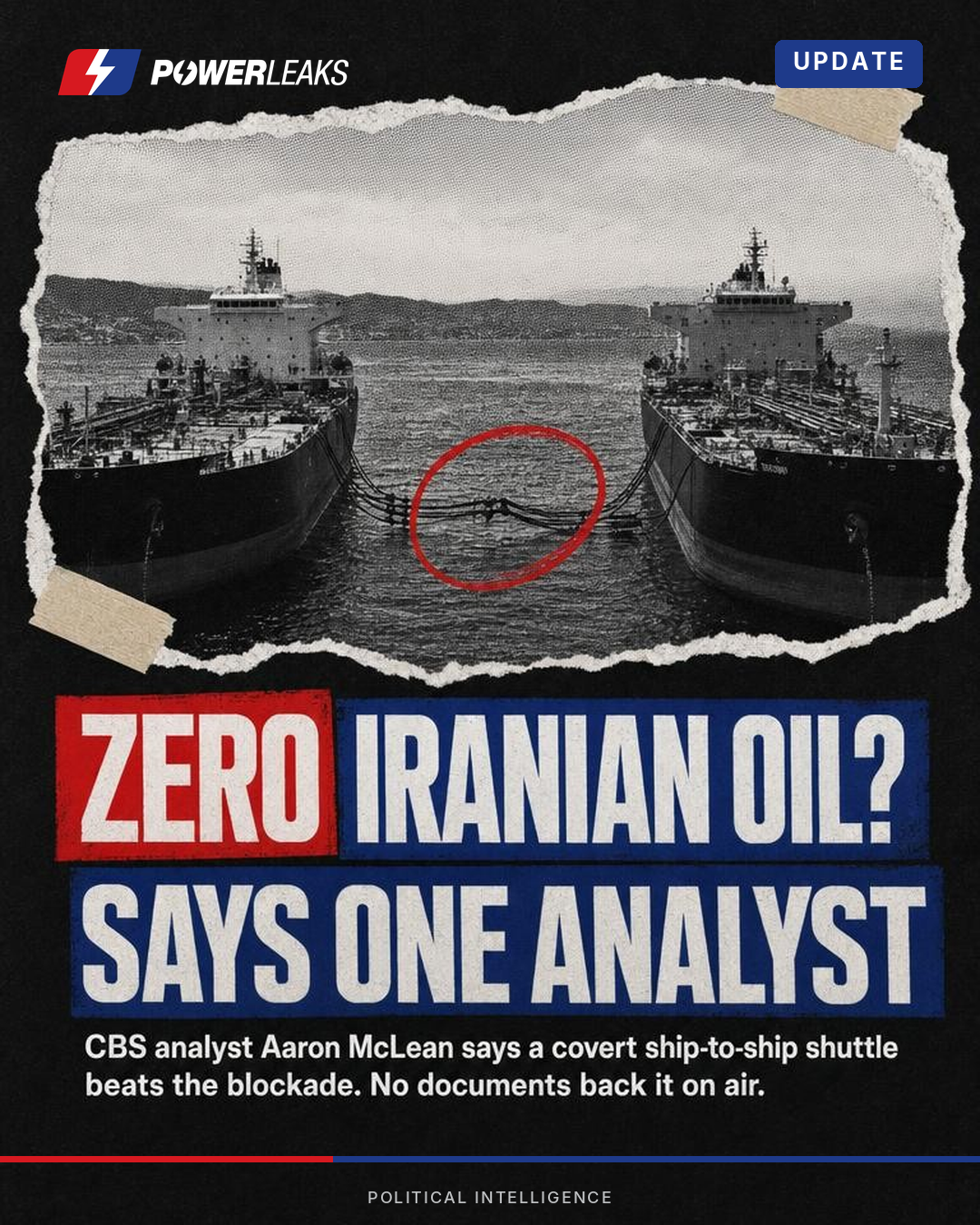
Iranian oil getting through the Strait of Hormuz is at zero right now, CBS News national security analyst Aaron McLean said during a live CBS broadcast.
The US is seven months into its war with Iran, per the broadcast's own framing earlier on air. McLean said US Central Command has been fighting a battle for control of the strait since early this summer. His read: it is winning, for now.
Developing, unverified: McLean's account of a covert transit system is his analysis on air. The broadcast offered no documents or official statements to back it. His claims that oil flow is near pre-war levels and Iranian exports are at zero are also his own.
Here is how McLean described the system. Ships run a shuttle service through the southern Omani channel. Out at sea, beyond the range of most Iranian weapons, they transfer oil ship to ship. He said near pre-war levels of oil have probably been getting through for at least several weeks.
Earlier in the broadcast, the anchor cited oil tracker Kpler: shipments have risen to about 80% of pre-war levels. That is a different number from McLean's. The broadcast did not reconcile the two.
Iran is not done. McLean said there were several reports of ships being fired on in the strait in the last 24 hours. "This is not some sort of final victory," he said.
Gulf oil is getting out and Iranian oil isn't, which puts tremendous pressure on Iran.
That, McLean said, cuts Iran's leverage in negotiations. But Tehran "haven't changed the negotiating position yet." He said the effect, if any, will show in the weeks and months ahead.
Prices are still high. West Texas Intermediate was trading around $90 a barrel and Brent near $100 during the broadcast. McLean said the workaround is expensive: elevated insurance, more specialized crews and extra security costs. Pipeline shipments across Saudi Arabia add to the total. He called it a complicated, expensive system.
He also pointed to damaged refinery infrastructure in the region and the Russia-Ukraine war as forces keeping refined product prices high. Things could be much worse if the strait were closed, he said.
Separately, a market-commentary post using the #Trump hashtag says Trump rejected an Iranian plan to reopen the strait within seven days. The post says Iran wanted the US naval blockade lifted, oil sanctions waived and $12bn in frozen assets released. It says November Brent hit $108.83 on Monday before settling at $105.28. Those figures differ from the CBS prices, and the CBS broadcast did not mention the plan.
The next test is McLean's own: whether Iran changes its negotiating position in the weeks ahead.