
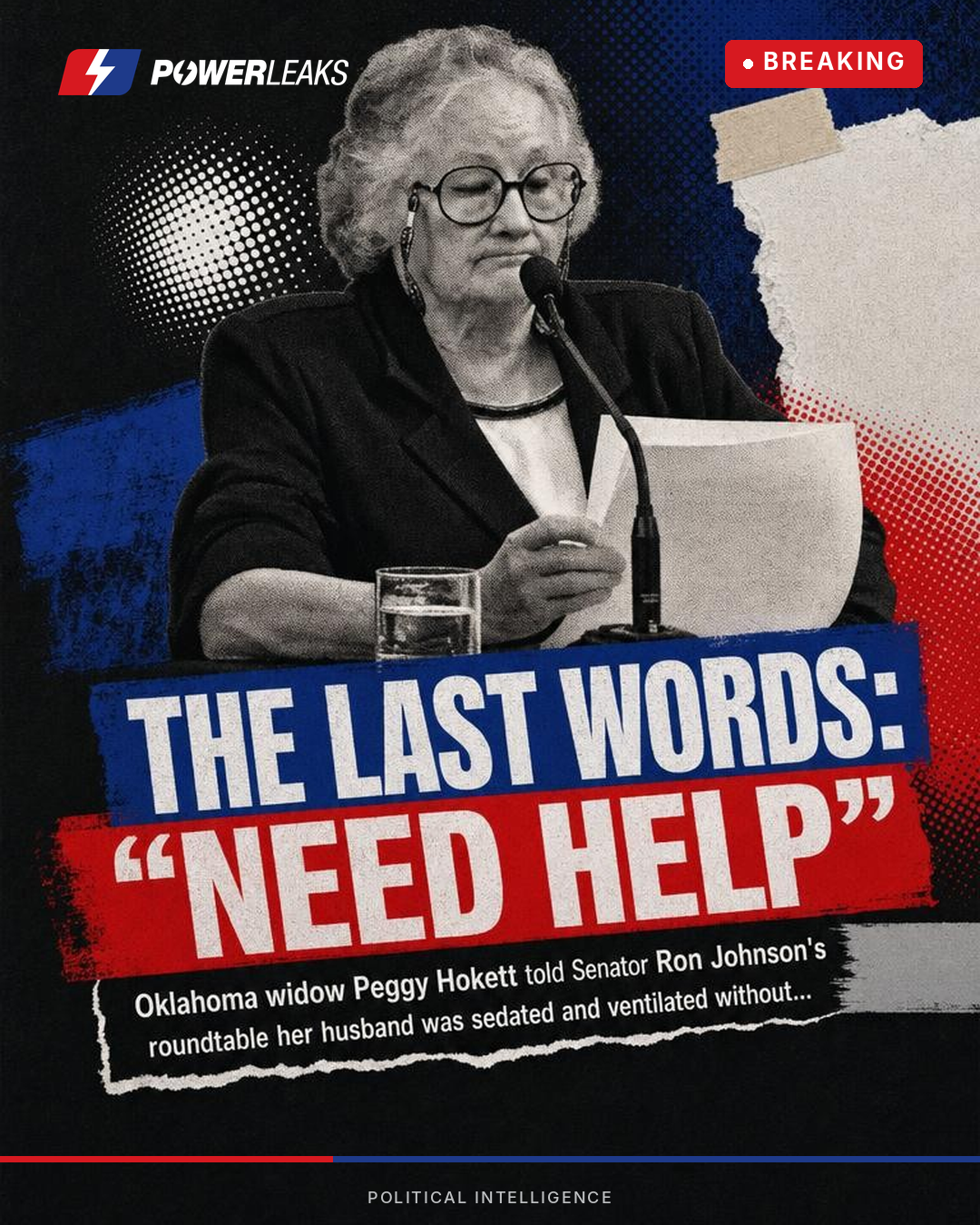
"Need help." Those were the last words Peggy Hokett ever heard from her husband Raymond.
The Oklahoma widow delivered that testimony Monday (September 28) at Senator Ron Johnson's roundtable on COVID-19 hospital protocols, telling a room in Washington that her 58-year-old husband was sedated and placed on a ventilator without consent and repeatedly told he would die because he was unvaccinated. Raymond Hokett died September 21, 2021, 24 days after walking into an Oklahoma City emergency room.
Johnson (R-WI) convened the roundtable, titled "COVID-19 Hospital Protocols: Real Stories from Real People," bringing patients, family members, physicians, and nurses to Washington. His office said the event was the first of his COVID-related hearings devoted entirely to hospital treatment protocols. Right-leaning outlet The Gateway Pundit covered Hokett's account in detail September 29.
These are Hokett's allegations, delivered in testimony. No hospital has responded, and no independent corroboration appears in the source.
Johnson introduced Hokett by telling attendees that Raymond died 24 days after being hospitalized in Oklahoma City. "He was given remdesivir, told he would die because he was unvaccinated, and placed on a ventilator without consent," Johnson said.
According to Hokett's account, she and Raymond both fell ill on August 25, 2021. Their primary-care office was locked down for COVID, so they went to the ER. Raymond tested positive. His oxygen saturation was 93. Records noted he needed blood platelets, but staff said he would have to go elsewhere to receive them. The ER said it would refer him for Regeneron. That referral, she testified, was never made. They were sent home and told to come back if he got worse.
Three days later he returned dehydrated, vomiting, with diarrhea. He agreed to a three-to-five-day admission. A doctor told Peggy to go home, get his phone charger, and kiss him goodbye.
Records she later obtained showed Miralax, Colace, high-dose narcotics, and 200 milligrams of remdesivir. He left on four liters of oxygen, still at 93 percent saturation. The next morning, an infectious-disease doctor called her.
"Your husband's going to die," Hokett said the doctor told her. "He's unvaccinated. What did you expect?"
She later learned he had already received three doses of remdesivir.
On August 30, records showed a fever. Staff pulled his gown, put a fan on him, turned the thermostat down, and put him on BiPAP. That morning he tried to call his wife. He left a message: "Need help." Later the same day, a nurse called Peggy to talk about discharge and what equipment she would need at home.
On August 31, records showed Prevace, fentanyl, and propofol, and stated clearly there were no open wounds.
On September 1, when she called to check on him, staff said he had to be ventilated because of an "emergency." The records showed he had already been sedated the day before. Neither Raymond nor Peggy consented, she testified.
Every status call after that, she said, produced the same line: He's dying. He's unvaccinated. What did you expect?
On September 2, records instructed staff to call LifeShare if his condition worsened. Raymond was not an organ donor.
On September 17, she negotiated her way onto the COVID floor, which she said was guarded by armed guards. She could barely recognize her husband. He was severely bloated. Fluids dripped off his body onto the floor in puddles.
On September 20, the platelets he needed on August 25, the hospital finally requested consent for. He received them the day before he died.
On September 21, she was told he would not survive the day. She was allowed to sit with him. Doctors repeatedly asked her to make him a DNR and donate his organs. She said no every time. Raymond died that day with his wife sitting beside him.
After the body went to the crematorium, the funeral home called. "Did they take something out of your husband?"
Hokett said she requested his medical records five times. Staff eventually told her the rest of the file was "garbage" and she would have to pay for it. She paid.
What she found, she testified, were photographs of Raymond's body and records documenting open wounds and sores she had never been told about. One deleted file said staff could not perform a spontaneous breathing test because he had an open wound in his abdomen. "I was never supposed to see it," she said. In less than 10 minutes, they called the organ-donation people.
"My husband was physically and chemically restrained. And the last words I ever heard from him was, 'Need help.'"
"Raymond can no longer speak for himself, but I can," Hokett told the room. "I am asking Congress to seek the truth and find out what happened to my husband and many other victims of this severely flawed hospital protocols."
Hokett's testimony is now part of the congressional record. No hospital, medical authority, or licensing board has publicly responded to her specific claims.