
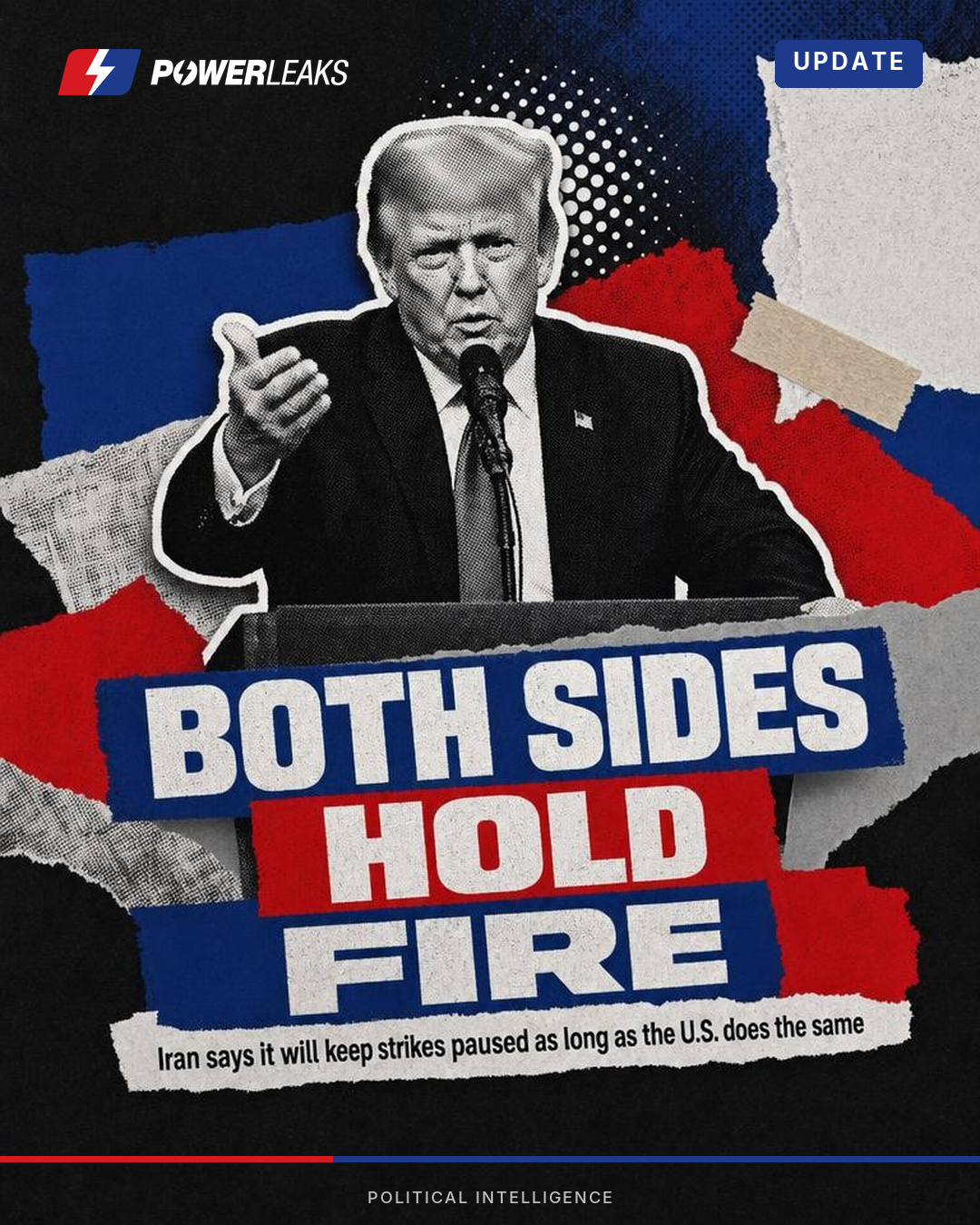
Iran told the United States it will halt its retaliatory strikes as long as Washington maintains its pause on airstrikes, a senior Iranian official told Reuters on Sunday (July 26), as both sides held fire for a second consecutive day.
The stand-down follows 13 nights of intensifying US airstrikes on Iran that the Pentagon suspended late Friday, with no American attacks reported on either Saturday or Sunday. Iran, which had answered each night of US attacks with its own strikes on neighboring countries hosting US bases, also held fire for two days.
The reciprocal pause opened space for Omani officials to meet their Iranian counterparts in Tehran over the weekend. Iranian Foreign Ministry spokesman Esmail Baghaei said in a Telegram post that he met with the Omani deputy foreign minister on Friday and Saturday, exchanging views on operational mechanisms for managing safe maritime navigation through the Strait of Hormuz.
"The talks were constructive, and some progress was made," Baghaei said, noting that technical and political consultations remain ongoing. The Omani delegation left Tehran on Saturday evening.
US Ambassador to the United Nations Mike Waltz told Fox News on Sunday that Trump had decided to pause US attacks to allow more time for diplomacy. "He's giving talks some space, he's giving it a little bit of room," Waltz said, without providing further details.
Iran's position remains 'attack for attack': if the attacks stop, Iran will also halt its operations.
That message has already been conveyed to the United States, the senior Iranian source told Reuters, speaking on condition of anonymity. The source added: "However, Iran is prepared to mount a broad response should the U.S. launch another attack."
Tehran remains deeply skeptical that the pause represents a genuine shift. "There is more skepticism than optimism about the halt in attacks. The prevailing view is that the pause is tactical rather than genuine. Iran has accumulated enough bitter experience with what it sees as U.S. deception," the source said.
A senior Trump administration official said Saturday that the president "has always been clear that his preference is diplomacy, but he has shown Iran what will happen if they fail to come to the table in a serious way."
The Telegraph reported that Trump paused plans to escalate after being warned the US is running low on missiles. CNN and the New York Times reported that Pentagon Chief of Staff Dan Caine pointed to the depletion of Patriot air defense missile stocks, which US forces have relied on to defend bases in the Middle East, and that Vice President JD Vance also expressed reservations. Axios reported that Admiral Brad Cooper, overall commander of US forces in the Middle East, advised halting the campaign.
Iranian Army spokesman Mohammad Akraminia appeared on state television Sunday and warned that any further US strikes would widen the conflict. "I believe that if the Americans once again fall for the Zionists' deception, or move in line with them, and insist on continuing the war, particularly through air strikes, geographically this will expand further," Akraminia said. He said the conflict has already expanded to the Bab al-Mandab Strait on the southern Red Sea, and that "the scope of our operations now encompasses the entire region, from US bases in Jordan to the countries along the Persian Gulf."
The talks and pause came as Brent crude futures surged above $100 a barrel last week and the national average for regular gasoline jumped above the politically sensitive $4-a-gallon mark. Weekend US crude via IG Markets was down about 5% as of late morning New York time. JPMorgan's head of Global Commodities Research and Strategy, Natasha Kaneva, told clients last week that Brent prices at this level could increase pressure on Washington to reopen diplomatic channels. Goldman commodities analyst Daan Struyven warned that Brent could top $120 a barrel by the fourth quarter if disruptions at the Hormuz chokepoint deepen.
Fars News circulated footage showing a line of ships stopped in the Strait of Hormuz. Regional spillover continued elsewhere: Iran-backed Houthis claimed to have fired missiles and drones at Saudi Aramco facilities in Jizan and Yanbu on Saturday, with Saudi authorities briefly issuing emergency warnings before saying the danger had passed. The United Kingdom Maritime Trade Operations reported an incident in the southern Red Sea on Sunday after a tanker witnessed a splash from an unknown projectile in proximity to the vessel. An LPG tanker with 28 Indian crew members was attacked in Iranian territorial waters on Friday, with India's embassy confirming the crew are safe.
Israeli Prime Minister Benjamin Netanyahu will travel to Washington to meet with Trump at the White House on Tuesday to discuss the Iran situation. China urged both countries to return to the ceasefire agreement, with Foreign Minister Wang Yi expressing deep concern over renewed escalation in the Middle East.
The US had gradually expanded the scope of its strikes over two weeks, hitting bridges and infrastructure deeper inside Iran, after a brief ceasefire in June collapsed over a battle for control of the Strait of Hormuz. Billionaire investor Ray Dalio warned that the war's outcome hinges on the waterway, calling a decisive clash imminent.
The question now is whether the pause holds long enough for Oman's quiet diplomacy to produce a durable off-ramp, or whether Tehran's skepticism proves warranted and the missiles start flying again.